

By using our website, you agree to the use of cookies as described in our Cookie Policy
Roof Truss Planning & Lead Times for New Construction in Dallas–Fort Worth
Most builders think truss planning is just about measurements and delivery dates. Get the numbers right, place the order, wait for the truck. But the reality in Dallas–Fort Worth is messier than that — and if you're not accounting for lead times early, you're setting yourself up for delays that ripple through the entire build. Trusses aren't something you can rush or improvise. They're engineered components that need approval, fabrication time, and coordination across multiple parties.
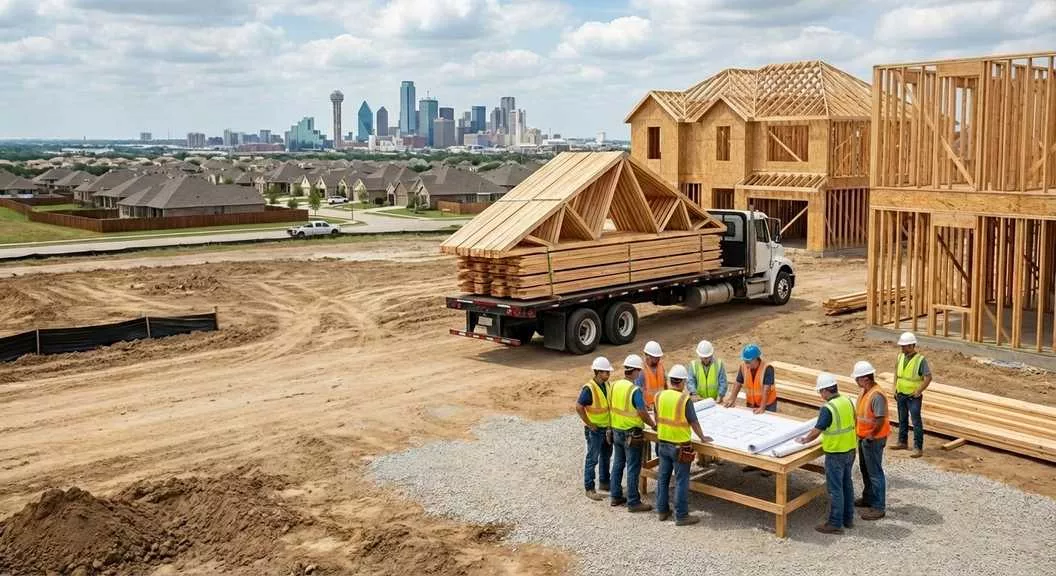
So here's what matters. If you're breaking ground on new construction, your truss timeline starts the moment your plans are finalized — not when framing begins. Every week you wait to engage a supplier is a week you lose on the back end. And in a market as hot as DFW, where manufacturers are running at capacity and permitting can drag, that lost time adds up fast.
Why Trusses Can't Be an Afterthought
Roof trusses carry the load of your entire roof system. They're custom-built for each project based on span, pitch, load requirements, and local code. That means no two orders are identical, and no supplier keeps a stockpile sitting around waiting for your call. Everything is made to order, which means everything depends on how early you start the process.
In DFW, where summer heat and storm exposure demand solid engineering, roof truss design isn't just structural — it's survival. A poorly planned system can fail inspection, delay framing, or worse, create long-term performance issues. And when you're juggling subcontractors, financing deadlines, and buyer expectations, a truss delay can derail the whole schedule.
The Timeline You're Actually Working With
From the moment you hand over architectural plans to the day trusses hit your job site, you're looking at a multi-week process. It's not just manufacturing time — it's design review, engineering calculations, permit approval, fabrication, and logistics. Each step has its own clock, and none of them move faster just because you're in a hurry.
Here's the breakdown most DFW builders are dealing with:
- Design coordination and engineering review typically take one to two weeks, depending on complexity and how quickly all parties respond
- Permit submission and approval can stretch from one to three weeks, depending on which municipality you're building in
- Manufacturing runs anywhere from two to six weeks, with longer timelines during peak season or for custom configurations
- Delivery scheduling usually takes one to two days once production wraps and transport is arranged
Where Builders Lose Time
The biggest delays don't come from the truss plant — they come from incomplete information, late design changes, and underestimating how long permitting takes. If your architectural drawings aren't final, the truss designer can't start. If your engineer makes a revision after the shop drawings are done, you're back to square one. And if your local building department is backlogged, your approval sits in a queue no matter how fast the manufacturer works.
DFW's construction boom means truss suppliers are busy. Really busy. If you wait until framing is about to start to place your order, you're not getting priority placement. You're getting whatever slot is available, and that might be weeks out. Builders who plan ahead lock in production capacity early and avoid the scramble.
What You Need to Get Right Up Front
Truss suppliers need accurate information to build what you actually need. That means finalized plans, confirmed dimensions, and clear load specs. Any guesswork or placeholder numbers will come back to haunt you when the trusses show up and don't fit — or worse, when they fail inspection.
Here's what your truss order depends on:
- Complete architectural plans with roof layout, pitch, and overhang details
- Structural engineering calculations showing load requirements and support points
- Site measurements that match the foundation and framing layout
- Local code requirements, which vary across DFW municipalities
- Delivery access and staging area for offloading and installation
Permitting Adds Weeks You Can't Control
Every truss order in DFW requires engineered drawings and a stamp from a licensed professional. Those drawings get submitted to the local building department for review and approval before manufacturing can begin. Some cities move fast. Others don't. And if your plans get kicked back for revisions, the clock resets.
This is where builders get blindsided. You can't speed up a building department, and you can't skip the approval process. The only control you have is submitting clean, complete documentation the first time. Work with your truss supplier and engineer to make sure everything is code-compliant before it goes in for review.
Peak Season Means Longer Waits
Spring and summer are peak construction months in DFW, and truss manufacturers feel it. When demand spikes, lead times stretch. A project that might take four weeks in January could take six or more in May. If you're building during high season, factor that into your schedule and get your order in early.
Custom truss designs also take longer to produce than standard configurations. If your project includes complex roof lines, cathedral ceilings, or non-standard spans, expect additional time for engineering and fabrication. Communicate those details up front so your supplier can give you a realistic timeline.
How to Keep Your Project on Track
The builders who avoid truss delays are the ones who treat this phase like the critical path item it is. They engage suppliers early, provide complete information, and build buffer time into their schedules. They don't assume everything will go perfectly, and they don't wait until the last minute to start the process.
Here's what keeps projects moving:
- Contact truss suppliers during the design phase, not after framing starts
- Confirm all architectural and engineering details before submitting for shop drawings
- Account for permitting timelines specific to your city or county
- Build in a two-week buffer for unexpected delays or revisions
- Coordinate delivery timing with your framing crew's availability
When Changes Happen Mid-Process
Design changes after truss engineering has started are expensive and time-consuming. If your architect tweaks the roof line or your client requests a vaulted ceiling after shop drawings are done, you're looking at rework, re-approval, and lost production time. Some changes are unavoidable, but most can be prevented with thorough planning up front.
If a change does happen, communicate it immediately to your truss supplier and engineer. The faster they know, the faster they can assess the impact and adjust the timeline. Don't assume a small change is no big deal — even minor revisions can require new calculations and permit resubmission.
Delivery Day Requires Coordination
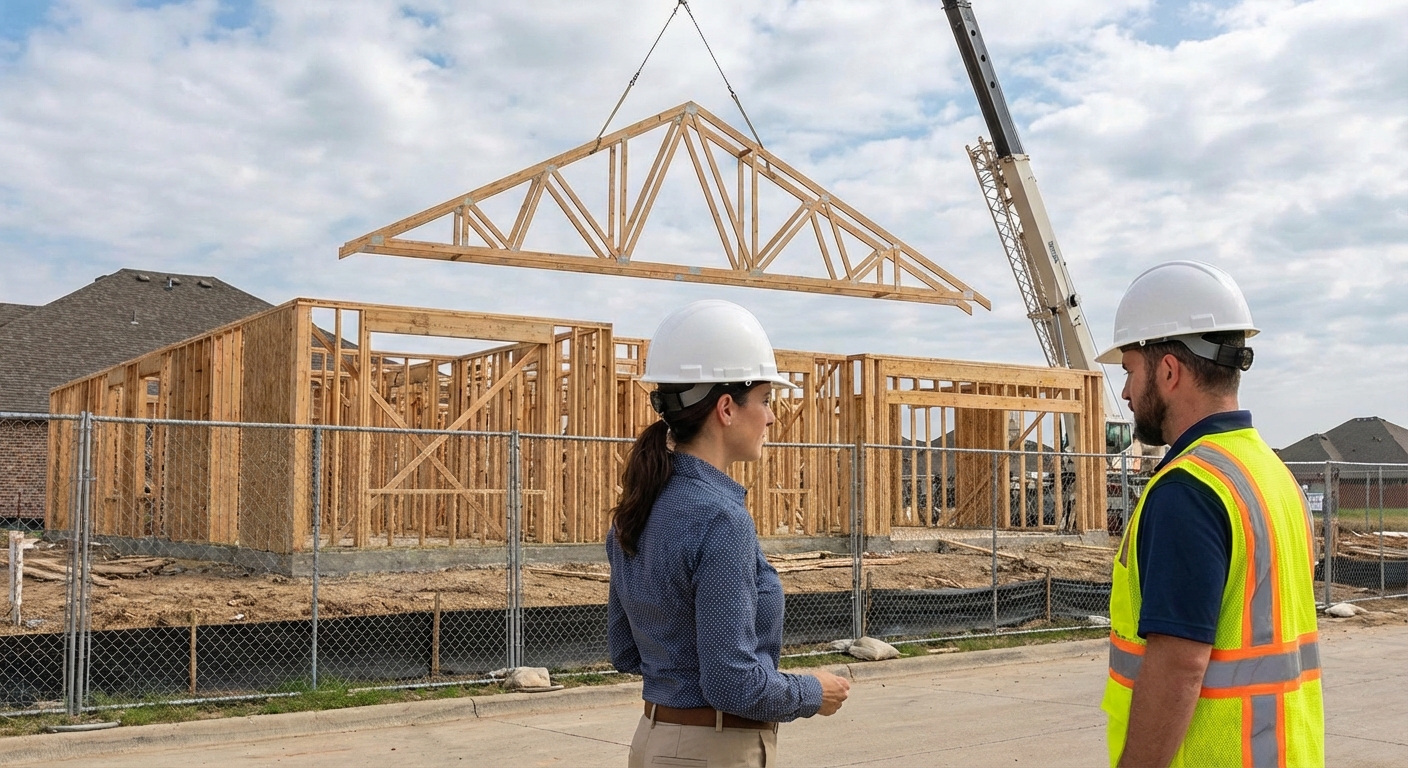
Trusses arrive on a flatbed truck, and they need space to offload and stage. If your site isn't ready or your framing crew isn't available, you've just created a bottleneck. Coordinate delivery timing with your schedule, confirm site access, and make sure your crew is prepared to install the same day or secure the trusses properly if installation is delayed.
Weather can also impact delivery and installation. High winds or rain can make truss setting unsafe, so keep an eye on the forecast and have a backup plan if conditions aren't ideal.
What Experienced Builders Do Differently
The builders in Dallas–Fort Worth who consistently hit their timelines treat truss planning like a partnership, not a transaction. They work closely with their suppliers, communicate changes immediately, and respect the lead times involved. They don't try to compress the schedule by skipping steps or hoping for shortcuts.
Here's what separates smooth projects from chaotic ones:
- Early engagement with truss suppliers to lock in production slots
- Complete and accurate information provided up front to avoid revisions
- Realistic timelines that account for design, permitting, and manufacturing
- Open communication with all parties throughout the process
- Contingency planning for delays or changes that might arise
Planning Beats Scrambling Every Time
Truss delays don't happen because suppliers are slow — they happen because builders wait too long to start the process or provide incomplete information. In a market as competitive as Dallas–Fort Worth, where construction timelines are tight and buyer expectations are high, you can't afford to treat trusses as an afterthought. The projects that stay on schedule are the ones where roof truss delivery planning starts early, communication stays consistent, and everyone involved understands the timeline they're working with. Get ahead of it, and you'll avoid the delays that derail so many builds.
Let’s Build Your Project Right from the Start
We know how critical it is to keep your Dallas–Fort Worth build on schedule, and that starts with smart truss planning and clear communication. If you’re ready to avoid costly delays and want a team that understands the ins and outs of local construction, let’s talk. Call us at 407-431-4263 or get a quote today so we can help you keep your next project moving forward without a hitch.
‹ Back
Recent Posts
-
Roof Truss Layouts for Custom Homes in Austin
October 1, 2026
-
Are Roof Trusses in Houston Good for Modern Home Designs?
September 17, 2026
-
-
-