

By using our website, you agree to the use of cookies as described in our Cookie Policy
How Much Do Roof Trusses Cost in Dallas-Fort Worth Builds?
Most builders think roof trusses are just another line item. Wood, metal, installation — done. But the real cost isn't just what you pay upfront. It's what you lock in structurally, what you commit to architecturally, and what you can't change later without tearing half the roof apart. Trusses set the tone for everything above your walls, and in Dallas-Fort Worth, where weather swings hard and building codes don't mess around, getting this right matters more than most people realize.
So here's the reality. If you're building something that needs to last, trusses aren't the place to cut corners. But they're also not a mystery. Every dollar spent should tie back to span, load, and design. Every quote should break down material, labor, and delivery. And every decision should be grounded in what your roof actually needs to do — not just what looks good on paper.
What Trusses Actually Do
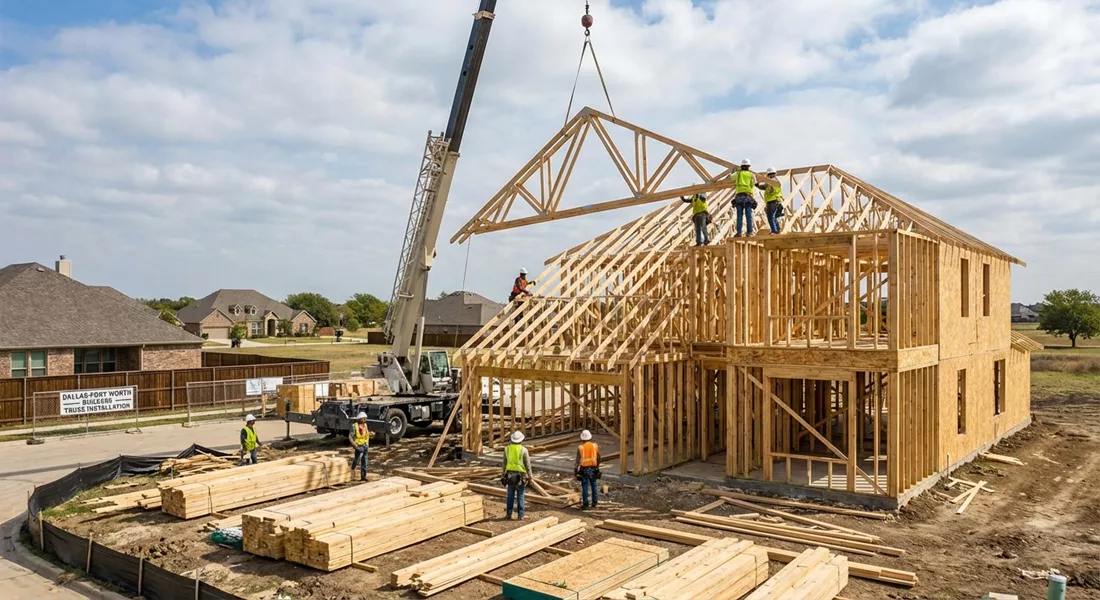
Roof trusses are pre-engineered frameworks that carry the weight of your roof and transfer it down to the walls. They're built off-site, delivered ready to install, and designed to handle specific loads based on your building's dimensions. In residential construction across DFW, wood trusses dominate because they're cost-effective and fast to put up. Steel trusses show up in commercial builds or when spans get too wide for wood to handle safely.
Trusses come in different shapes depending on what the roof needs to do. King post, fink, attic, scissor — each one serves a different purpose. Some maximize attic space. Others create vaulted ceilings. And some just get the job done with the least amount of material. The design you pick affects cost, installation time, and what you can do with the interior later.
What You'll Pay in DFW
In the Dallas-Fort Worth market, wood roof trusses typically run between $4 and $8 per square foot, including materials and installation. For a standard 2,000-square-foot home, that puts you somewhere between $8,000 and $16,000 total. If your design gets more complex — vaulted ceilings, custom angles, or unusual spans — expect that number to climb toward $10 to $15 per square foot.
Steel trusses cost more, usually starting around $7 to $12 per square foot. They're stronger and can span longer distances, but they're overkill for most residential projects. Unless you're building something commercial or dealing with extreme load requirements, wood handles the job just fine.
What Drives the Price Up
- Span and size: Wider buildings need longer trusses, which means more material and higher engineering costs.
- Design complexity: Simple gable trusses are cheap. Scissor trusses or attic trusses with storage space? Not so much.
- Lumber prices: Wood costs fluctuate with the market. What you pay this month might not match what you'd pay next quarter.
- Labor rates: Installation is straightforward, but difficult site access or tight timelines can push labor costs higher.
- Order volume: Buying trusses in bulk for multiple homes or a larger development can sometimes get you a discount.
Breaking Down a Real Number
Let's say you're building a 2,000-square-foot home in the DFW area. Here's what the truss cost might look like when you break it apart.
- Material cost for wood trusses: $4 to $6 per square foot = $8,000 to $12,000
- Labor and installation: $2 to $4 per square foot = $4,000 to $8,000
- Total estimated range: $12,000 to $20,000
These are averages. Custom designs, premium materials, or tricky site conditions can push you past the high end. But for most residential builds, this range holds up.
Where You Can Save Without Cutting Corners
- Stick with standard designs: Off-the-shelf truss shapes cost less than custom engineering.
- Plan early: Work with your architect and builder before framing starts to avoid redesigns that waste time and money.
- Get multiple quotes: Truss suppliers in DFW vary in pricing and lead times. Shop around.
- Order smart: If you're building more than one structure, bulk orders can lower per-unit costs.
- Watch the calendar: Lumber prices shift with demand. Timing your order during a dip can save thousands.
What Happens When You Cheap Out
Trying to save a few thousand on trusses by going with the lowest bid or skipping engineering review? That's a gamble. Undersized trusses can sag. Poorly installed trusses can shift. And if your truss system doesn't meet local building codes, you'll be tearing it down and starting over — at double the cost.
DFW weather doesn't play nice. High winds, hail, and temperature swings put real stress on roof structures. Your trusses need to be engineered for the loads they'll actually face, not just the minimum required to pass inspection. Cutting corners here doesn't save money. It just delays the bill.
Why Documentation Matters
Every truss system should come with engineering stamps and load calculations. You'll need these for permits, inspections, and insurance. If something goes wrong down the line — storm damage, structural issues, resale questions — those documents prove your roof was built to code.
- Truss design drawings: Show the layout, dimensions, and load ratings for every truss.
- Engineering certifications: Confirm the design meets local building codes and wind load requirements.
- Installation records: Document when trusses were delivered, installed, and inspected.
- Material receipts: Track what you paid and what grade of lumber or steel was used.
When to Bring in a Pro
If your build involves custom spans, unusual roof lines, or anything outside a standard gable, don't wing it. A structural engineer can design a truss system that handles the load safely and keeps costs in check. They'll also catch issues before they become expensive problems during framing.
Most truss suppliers in DFW offer design services as part of the quote process. Use them. They know local codes, material availability, and what actually works in this market. And if your builder is pushing back on truss recommendations, that's a red flag worth paying attention to. When evaluating suppliers, it's important to know what to ask when choosing a roof truss manufacturer in Dallas.
Trusses Set the Ceiling, Not Just the Roof
What you spend on trusses isn't just about keeping rain out. It's about what you can do with the space underneath. Attic trusses create storage. Scissor trusses open up vaulted ceilings. And standard trusses keep costs low while doing the job they're supposed to do. The right choice depends on what you're building and what you need the structure to deliver long-term. Understanding how roof truss design affects energy efficiency in Texas homes can also help inform your decision.
In Dallas-Fort Worth, where builds move fast and weather hits hard, truss decisions aren't something you revisit later. Get the design right, budget for quality materials, and work with suppliers who know the local market. Many builders in Dallas-Fort Worth prefer pre-fabricated trusses for their reliability and efficiency. Timing is also critical, so understanding when to schedule roof truss delivery for new construction in DFW can keep your project on track. That's how you keep your roof solid and your project on track.
Ready to Build with Confidence?
When it comes to roof trusses, making the right call now means fewer headaches and a stronger build down the road. Let’s work together to get your project started on the right foot with expert advice and a clear, detailed quote. Give us a call at 407-431-4263 or get a quote today and see how we can help you build smarter in Dallas-Fort Worth.
‹ Back
Recent Posts
-
Roof Truss Layouts for Custom Homes in Austin
October 1, 2026
-
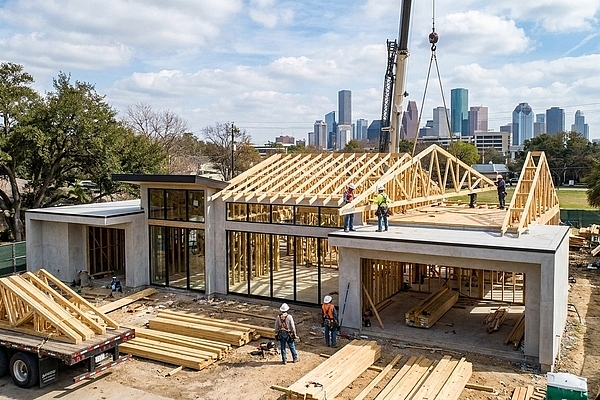
Are Roof Trusses in Houston Good for Modern Home Designs?
September 17, 2026
-
-
-