

By using our website, you agree to the use of cookies as described in our Cookie Policy
Residential Roof Truss Planning for New Construction in San Antonio
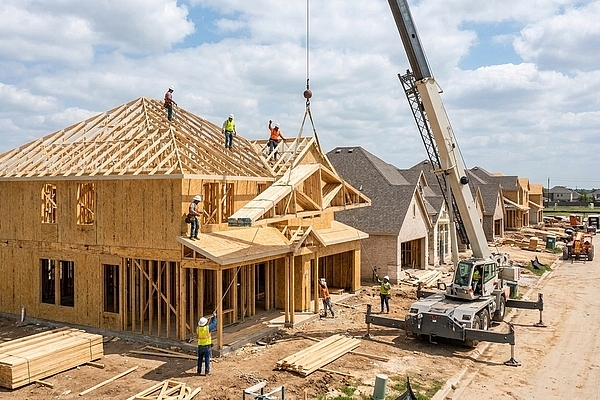
Most builders think roof trusses are just about holding up shingles. Framework in, weight distributed, done. But structural integrity runs deeper than that — and if you're not planning ahead, you're setting yourself up for headaches. Trusses may look simple on paper, but they dictate everything from ceiling height to energy efficiency. Especially in a climate like San Antonio's, where heat and storms don't play nice.
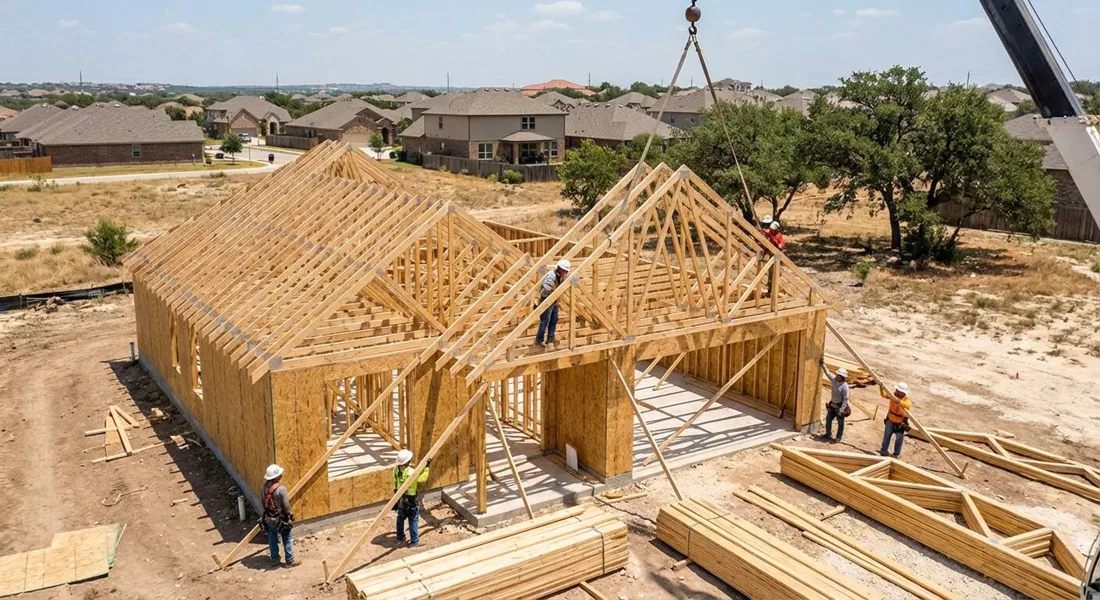
So here's what matters. If you're building something that'll last, truss planning isn't optional. Every span needs engineering. Every load calculation needs backup. And every design decision should be grounded in how the home will perform — not just how it looks in the rendering.
San Antonio Weather Doesn't Mess Around
You're building in a city where summer heat cracks foundations and sudden storms test every joint. Roof trusses need to handle both. The IBC and local amendments set minimum standards for wind uplift, snow load (yes, even here), and lateral bracing. But meeting code is baseline. Smart builders go further.
Humidity sits heavy most of the year, which means moisture management starts at the truss level. Ventilation pathways, insulation clearances, and attic airflow all hinge on how those trusses are spaced and designed. Skip this step and you're inviting mold, warping, and energy waste before the first family moves in.
Truss Types That Actually Fit Residential Builds
Not every truss works for every home. Some are built for speed, others for space, and a few are just overkill. Here's what we see most often in San Antonio residential projects:
- Fink trusses handle standard gable roofs and span up to 32 feet without interior support
- Attic trusses create usable storage or bonus rooms by opening up the center
- Scissor trusses give you vaulted ceilings without custom framing
- Hip trusses work for complex roof lines and multi-directional slopes
- Mono trusses cover single-slope roofs or shed-style additions
Each type comes with trade-offs. Attic trusses cost more but add square footage. Scissor trusses look great but limit insulation depth. Fink trusses are cheap and fast but lock you into flat ceilings. Choose based on function, not just aesthetics.
Engineering Comes Before Lumber
You can't just sketch a roof and order trusses. Every truss system needs a stamped engineering plan that accounts for dead load, live load, and environmental factors. In San Antonio, that means wind speeds up to 115 mph in some zones and occasional hail impact.
Your truss manufacturer will run the calcs, but they need accurate inputs. Roof pitch, overhang length, ceiling finish weight, HVAC loads — all of it feeds into the design. Miss one variable and you're either over-building (wasting money) or under-building (risking failure). Get the engineer involved early, before framing starts.
Spacing and Bracing Aren't Negotiable
Standard truss spacing is 24 inches on center, but some designs call for 16 or even 12. Tighter spacing means more trusses, higher cost, but better load distribution and less deflection. It also affects sheathing thickness and fastener schedules.
Bracing is where most framers cut corners. Temporary bracing keeps trusses upright during installation. Permanent bracing — lateral, diagonal, and top chord — keeps them stable for decades. The truss drawings will specify every brace location. Follow them. We've seen roofs shift because crews skipped three diagonal braces to save an hour.
Material Choices That Hold Up
Most residential trusses use southern yellow pine or SPF lumber, graded for structural use. In San Antonio, treated lumber isn't always required, but it's smart for trusses near unconditioned attics or exposed soffits. Termites and moisture are real threats here.
Metal plate connectors join the truss members. These plates are engineered for specific loads and must be pressed in fully during fabrication. Any gaps or partial seating compromise the entire truss. Inspect them on delivery — don't assume the manufacturer got it right.
Delivery and Staging Take Coordination
Trusses arrive on flatbed trucks, often 40 feet long. Your site needs clear access, level ground, and space to offload without damaging the frames. Most crews stage trusses near the building footprint, but not so close that they block other trades.
Check the delivery against your truss drawings. Count every piece. Verify the truss tags match the layout. If something's wrong, catch it before the crane shows up. Reordering a custom truss can delay framing by two weeks.
Installation Speed Doesn't Mean Sloppy Work
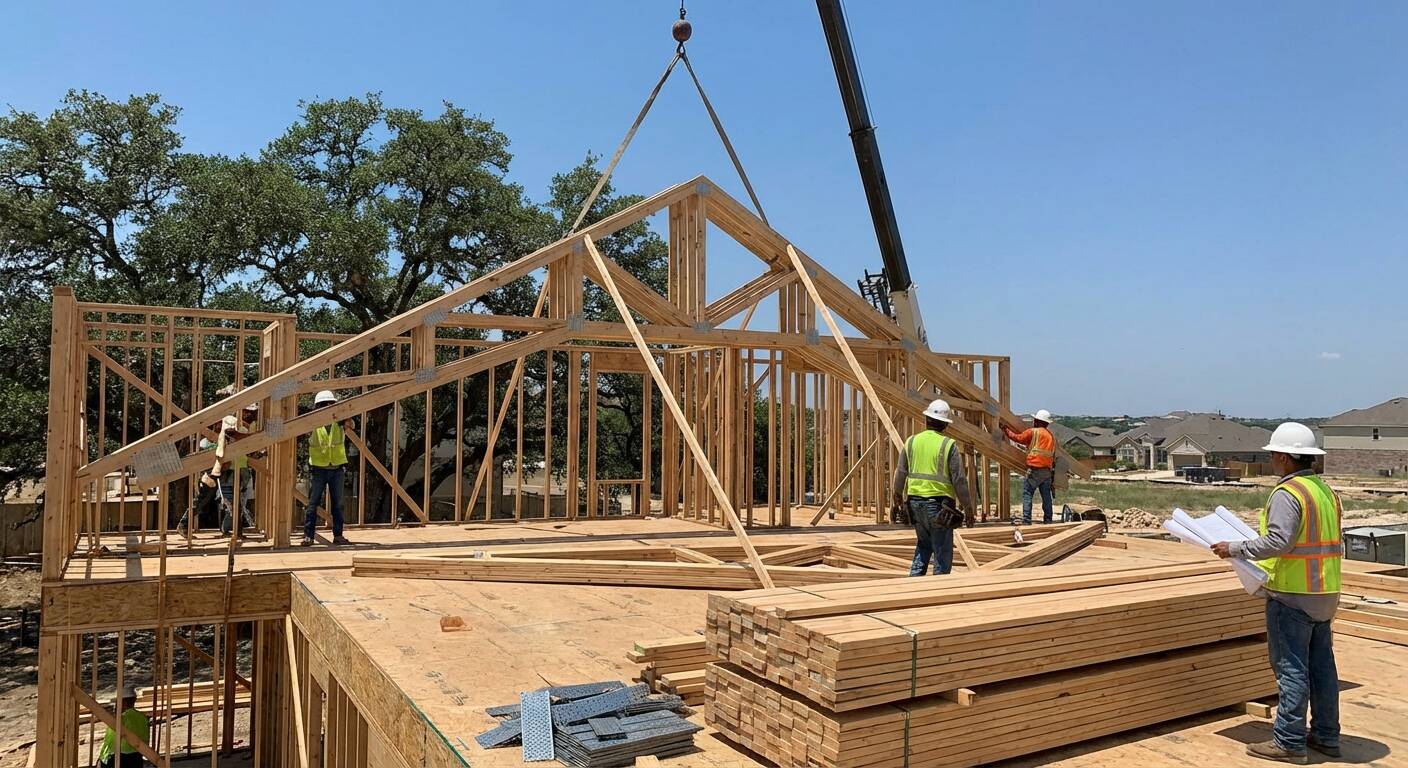
A good crew can set 30 trusses in a day. But speed only works when the prep is tight. Wall plates need to be level, layout marks need to be accurate, and bracing materials need to be staged. Once the first truss goes up, the rest follow fast — but only if the foundation is right.
Every truss gets toenailed or hurricane-tied to the top plate. In San Antonio's wind zones, metal connectors are often required. Don't skip them. Don't substitute. And don't let anyone tell you three nails are "good enough." The inspector will flag it, and you'll be pulling trusses to fix it.
Common Mistakes That Cost Time and Money
We see the same errors on site after site. Most are avoidable with basic planning and communication.
- Ordering trusses before the foundation is poured and walls are framed
- Ignoring truss drawings and winging the layout during installation
- Cutting or modifying trusses in the field without engineering approval
- Skipping permanent bracing because it's "not visible"
- Overloading trusses with HVAC equipment or storage before sheathing is installed
Each mistake compounds. A truss that's been cut loses its engineered strength. A roof without bracing can rack in high wind. And a layout that's off by two inches means every rafter tail and soffit detail has to be shimmed or scribed. Do it right the first time.
Why Local Codes and Inspections Matter
San Antonio enforces the International Residential Code with local amendments. Truss installations get inspected before sheathing goes on. The inspector checks spacing, bracing, connections, and compliance with the stamped drawings.
If you're in an HOA or historic district, there may be additional design restrictions. Some neighborhoods limit roof pitch or require specific materials. Confirm these before ordering trusses. Reordering because of an HOA rejection is expensive and embarrassing.
Working with the Right Truss Supplier
Not all truss manufacturers are equal. Some specialize in production homes and crank out standard designs. Others handle custom work and complex engineering. In San Antonio, you want a supplier who understands local wind loads, has fast turnaround, and provides clear drawings.
Ask for references. Visit their facility if possible. Check their lead times — four to six weeks is typical, but it can stretch during busy seasons. And make sure they offer delivery and will coordinate with your framing crew. A roof truss manufacturer who ghosts you after the sale is worse than no supplier at all.
Energy Efficiency Starts at the Truss
San Antonio summers are brutal. Attic temperatures hit 150 degrees, and that heat radiates into living spaces. Roof truss design affects how much insulation you can install and how well air circulates.
Raised heel trusses lift the top chord at the eaves, creating space for full-depth insulation over exterior walls. Standard trusses compress insulation at the edges, creating thermal bridges. The cost difference is minimal, but the energy savings add up over decades. If you're building to any green standard, raised heels are non-negotiable.
Planning Pays Off When the Roof Goes On
Roof truss planning isn't glamorous. It doesn't show up in photos or impress buyers at open houses. But it's the difference between a home that stands strong for 50 years and one that sags, leaks, or fails inspection. Every decision — from truss type to bracing schedule — ripples through the rest of the build.
We've guided hundreds of builders in Dallas-Fort Worth through truss planning in San Antonio. The ones who take it seriously finish on time, pass inspections, and avoid costly rework. The ones who wing it? They learn the hard way that structural shortcuts don't stay hidden for long.
Let’s Build It Right, Together
When it comes to your new home, every detail matters—especially the roof truss system that holds it all together. We’re here to help you plan, engineer, and deliver a roof that stands up to San Antonio’s toughest weather. Let’s talk about your project and make sure you get it right from the start. Call us at 407-431-4263 or get a quote today to get started with a team that knows what it takes to build strong in Texas.
‹ Back
Recent Posts
-
Roof Truss Layouts for Custom Homes in Austin
October 1, 2026
-
Are Roof Trusses in Houston Good for Modern Home Designs?
September 17, 2026
-
-
-