

By using our website, you agree to the use of cookies as described in our Cookie Policy
Are Roof Trusses in Dallas-Fort Worth Faster Than Stick Framing?
Most builders think framing is just about getting the roof up. Trusses or rafters, what's the difference? But if you're working in Dallas-Fort Worth, that choice affects your timeline, your labor costs, and whether you're racing the weather or working around it. Trusses don't just speed things up — they change the entire rhythm of a job site.
Here's what matters. If you're building something that needs to close in fast, trusses are the move. Just don't assume they're a one-size-fits-all solution. Every project has its own constraints. Every roof has its own demands. And every decision should be grounded in how the structure will perform — not just how quickly it goes up.
Prefab Means Less Guesswork on Site
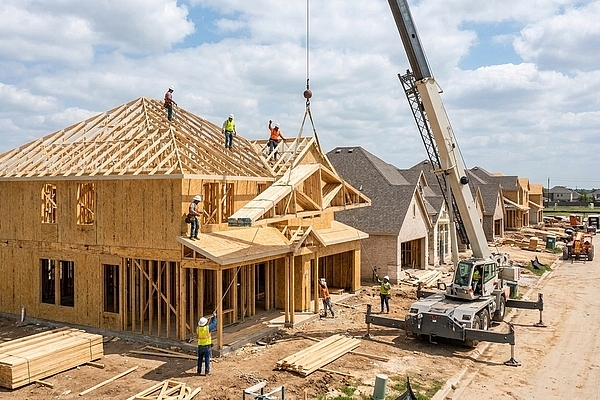
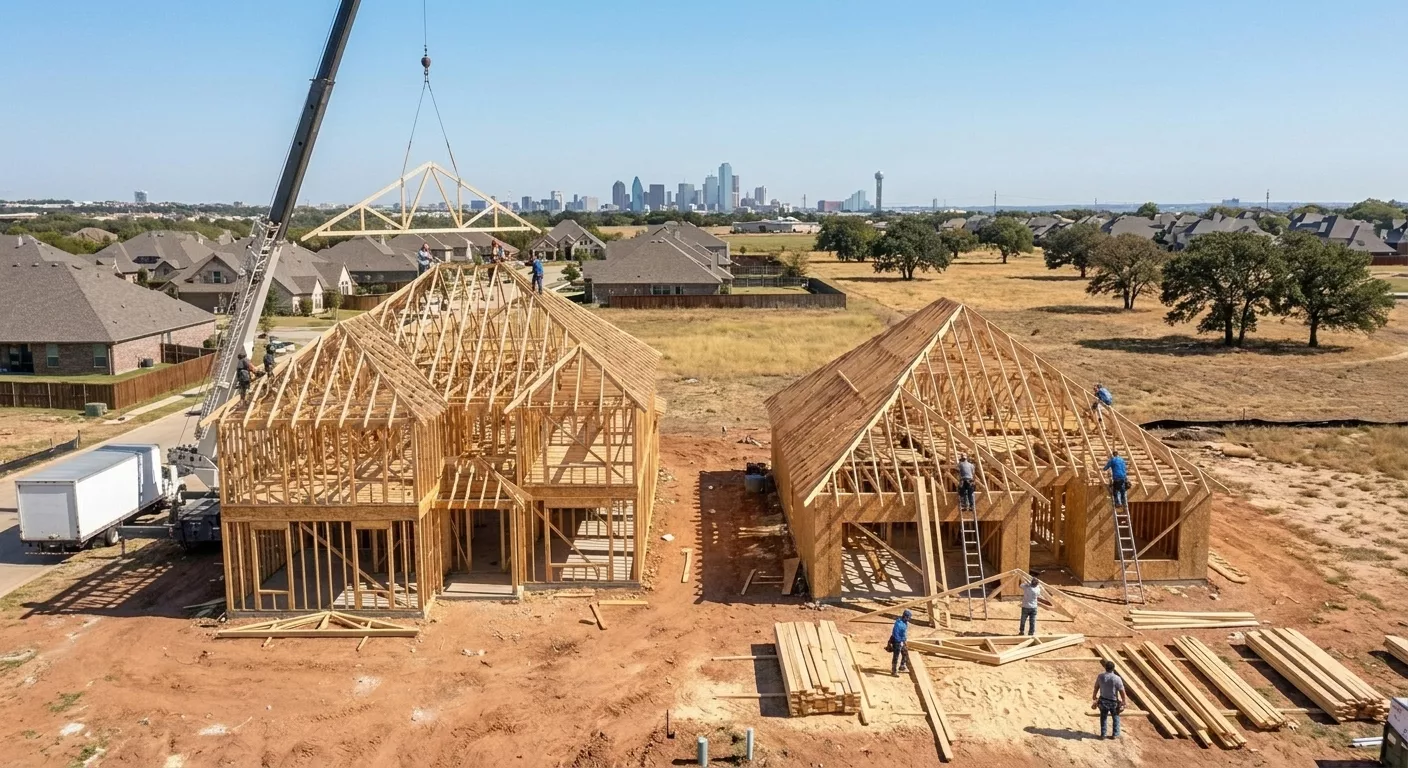
Trusses get built in a factory. That means precision cuts, engineered loads, and zero weather delays during fabrication. By the time they roll onto your site, they're ready to lift and lock in. No measuring twice. No cutting rafters in the Texas heat. Just a crane, a crew, and a few hours to frame an entire roof.
Stick framing is different. You're cutting every rafter by hand, nailing ridge beams, spacing joists, and hoping your measurements hold up under real-world conditions. It's skilled work — no question — but it's also slow. And when you're paying a crew by the hour in a market where labor runs tight, slow costs money.
Weather Doesn't Wait for Carpenters
DFW weather swings hard. One day it's 95 degrees with no clouds. The next, you've got a storm rolling in from the west and your framing crew is scrambling to cover materials. Trusses cut that exposure window down to almost nothing. You can frame a roof in a day, sometimes less, and get the sheathing down before the forecast turns.
Stick framing? You're looking at multiple days of exposure. Maybe a week if the roof is complex or the crew is stretched thin. Every extra day is another chance for rain to soak your lumber, wind to scatter your materials, or heat to slow your workers down. We've seen projects stall for weeks because a storm hit mid-frame and the wood had to dry out before sheathing could go on.
Labor Costs Add Up Fast
Skilled framers aren't cheap in North Texas. And they're not always available when you need them. Trusses reduce the number of man-hours required on site, which means you're not burning budget waiting for the right crew to show up. A smaller team can handle truss installation. Stick framing demands more bodies, more time, and more coordination.
Here's where that shows up in real numbers:
- Truss installation typically takes one to three days for a standard residential roof
- Stick framing the same roof can take five to ten days, depending on complexity and crew size
- Labor costs for stick framing often run 30 to 50 percent higher due to extended timelines
- Trusses require fewer specialized carpenters, making scheduling easier in tight labor markets
- Weather delays hit stick framing harder because the exposure window is longer
Engineering Takes the Risk Out
Trusses are designed by engineers. They're built to code, tested for load, and stamped before they leave the plant. That means fewer surprises during inspection and less chance of a structural issue down the line. You're not relying on a carpenter's eye to get the span right or the pitch perfect.
Stick framing puts more responsibility on the crew. If a rafter is cut wrong or a ridge beam sags, you're fixing it on the fly. That's not a knock on skilled framers — it's just the nature of site-built work. Mistakes happen. And when they do, they cost time and money to correct.
When Stick Framing Still Makes Sense
Trusses aren't always the answer. If you're building a custom home with vaulted ceilings, exposed beams, or a complex roofline that doesn't fit a standard truss design, stick framing gives you flexibility. You can adjust on the fly, accommodate unique architectural details, and create spaces that trusses can't deliver.
But that flexibility comes at a cost. You'll pay more for labor, spend more time on site, and take on more risk if the weather doesn't cooperate. For most production builds, commercial projects, or homes with standard roof truss design, trusses are the faster, cleaner, and more predictable option.
What Builders in DFW Are Choosing
Drive through any new development in Frisco, McKinney, or Fort Worth and you'll see trusses going up. Builders in Dallas-Fort Worth know the math. Faster framing means faster closings. Faster closings mean better cash flow. And better cash flow means more projects in the pipeline.
Here's what's driving that shift:
- Tighter construction schedules demand faster roof framing to keep projects on track
- Labor shortages make it harder to staff multi-day stick framing jobs
- Buyers expect move-in dates that don't slip, and trusses help builders deliver on that
- Lenders and investors favor predictable timelines, which trusses provide
- Insurance and liability concerns push builders toward engineered solutions with documented load ratings
The Cost Breakdown Isn't Just About Materials
Trusses might cost more upfront than buying lumber for stick framing. But that's not the full picture. You're also paying for engineering, precision, and speed. When you factor in labor savings, reduced weather risk, and faster project turnover, trusses often come out ahead.
Stick framing looks cheaper on paper until you add up the hours. Then you're paying for skilled labor, potential rework, and the opportunity cost of a slower build. If your crew could be starting the next job instead of spending another week on rafters, that's money left on the table.
Installation Speed Depends on Prep Work
Trusses only go up fast if the site is ready. That means walls are plumb, plates are level, and the crane has clear access. If your foundation is off or your walls aren't square, you'll spend time shimming and adjusting — and that eats into the speed advantage.
Stick framing is more forgiving in that sense. You can adjust as you go, compensating for minor issues in the framing below. But that flexibility doesn't make up for the time you lose cutting and assembling every piece on site.
Common Mistakes That Slow Down Truss Jobs
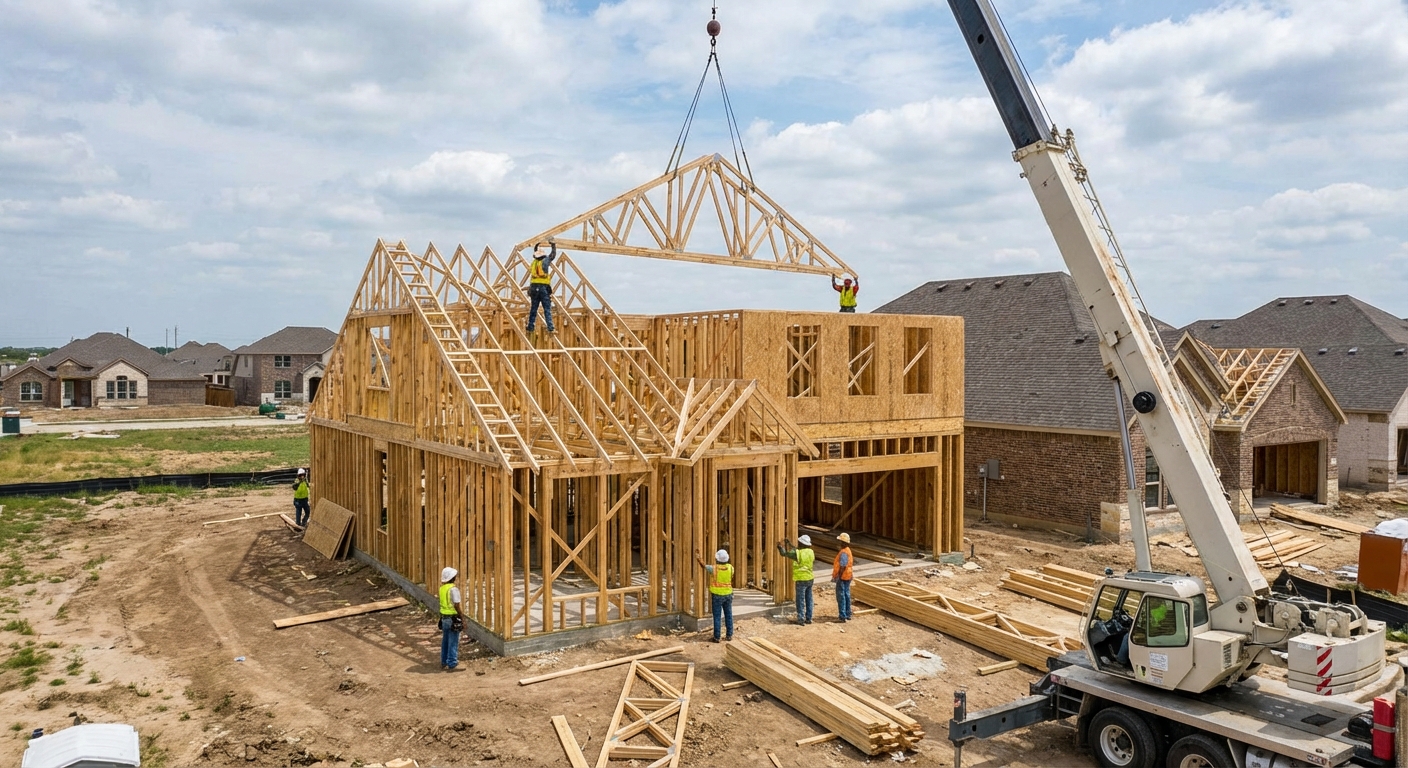
Even with trusses, builders can lose time if they're not careful. Ordering the wrong truss design, missing delivery windows, or failing to coordinate crane access can turn a one-day install into a multi-day headache.
Here's what trips up truss projects:
- Ordering trusses before the foundation and walls are confirmed square and level
- Failing to schedule crane delivery in advance, leading to delays when trusses arrive
- Not accounting for site access issues that prevent the crane from positioning properly
- Skipping the pre-installation check to ensure all trusses match the engineered plans
- Rushing the bracing process, which can lead to instability and rework
Why DFW Builders Aren't Looking Back
Speed matters in this market. Buyers want homes fast. Investors want returns faster. And builders who can deliver both are the ones winning bids and closing deals. Trusses make that possible without sacrificing quality or cutting corners.
Stick framing still has its place. But for the majority of projects in Dallas-Fort Worth, trusses are the smarter play. They're faster, more predictable, and better suited to the realities of building in a market that doesn't slow down. If you're planning a build and speed is part of the equation, the choice is already made.
Ready to Build Faster in DFW?
When it comes to keeping your project on schedule and your budget in check, choosing the right roof framing method makes all the difference. Let’s work together to streamline your next build and avoid costly delays. If you want expert advice or a quote tailored to your plans, give us a call at 407-431-4263 or get a quote and see how we can help you move forward with confidence.
‹ Back
Recent Posts
-
Roof Truss Layouts for Custom Homes in Austin
October 1, 2026
-
Are Roof Trusses in Houston Good for Modern Home Designs?
September 17, 2026
-
-
-