

By using our website, you agree to the use of cookies as described in our Cookie Policy
Roof Truss Design Considerations for New Home Construction in Houston
Most builders think roof trusses are just about holding up shingles. Framework in, framework out. But Houston's climate sees more than that — and if you don't, you're asking for structural headaches. Trusses may not be the flashiest part of a build, but they leave a footprint on everything from energy bills to storm survival. Especially if you're dealing with wind uplift or moisture intrusion.
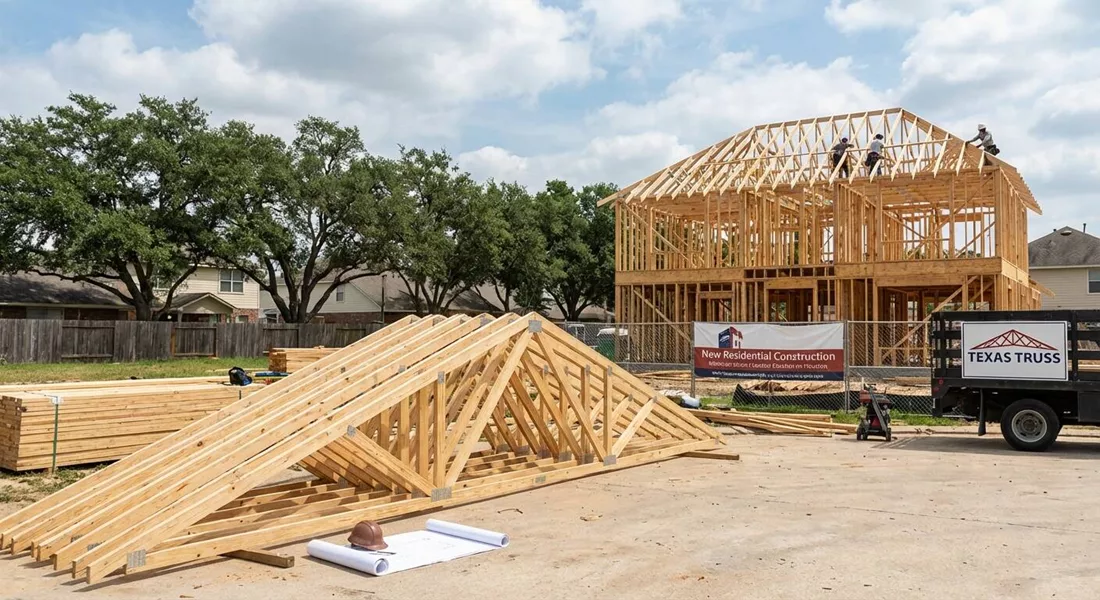
So here's the deal. If you're building something that'll last through hurricane season and brutal summers, that's great. Just don't treat truss design like a checkbox. Every span should have engineering backup. Every connection needs proper hardware. And every design decision should be grounded in how the structure will perform — not just how it looks on paper.
Houston Weather Doesn't Play Fair
The Gulf Coast throws everything at your roof. Humidity that breeds mold, rain that tests every seal, and wind events that can peel trusses right off the walls if they're not anchored correctly. We're not talking about occasional bad weather — this is year-round exposure that demands respect in the design phase.
Your truss system has to handle thermal expansion from scorching heat, resist moisture penetration during storm season, and maintain structural integrity when wind speeds spike. That means material selection matters. That means ventilation isn't optional. And that means every connection point between truss and wall plate needs to be engineered for uplift forces, not just gravity loads.
Code Compliance Isn't Negotiable
Houston and surrounding counties enforce specific requirements that go beyond generic residential standards. Wind zones, load calculations, and fire ratings all factor into what gets approved and what gets red-tagged. The IRC provides the baseline, but local amendments add layers that catch builders off guard if they're not paying attention.
Working with a structural engineer who knows Harris County's quirks saves time and money. Permits need documentation. Inspections need backup. And if your truss design doesn't match what's on the approved plans, you're looking at delays and rework. Get it right the first time or pay for it twice.
Material Choices That Hold Up
Treated lumber dominates Houston builds because it fights off moisture and pests better than untreated wood. But it's not the only option. Engineered wood products offer consistency and strength, while steel trusses bring durability that wood can't match — especially in high-humidity environments where warping becomes a real issue.
Steel does require attention to condensation, though. Houston's humidity can turn metal trusses into drip zones if insulation and vapor barriers aren't handled correctly. The trade-off is worth it for some builders, especially on larger spans or commercial-grade residential projects. Just know what you're signing up for and plan accordingly.
Design Configurations That Fit the Build
Roof pitch, span length, and architectural style all dictate which truss type makes sense. A steep pitch might call for a king post or fink truss, while attic trusses open up usable space for storage or living areas. Houston homes often feature complex rooflines with multiple hips and valleys, which means custom truss designs and careful load distribution.
Don't forget about what's going on top of the roof. Solar panels, HVAC units, and heavy tile roofing all add dead load that standard truss designs might not account for. If you're planning any of these additions, the truss engineer needs to know upfront. Retrofitting later is expensive and sometimes impossible without major structural changes.
Wind Uplift Will Test Every Connection
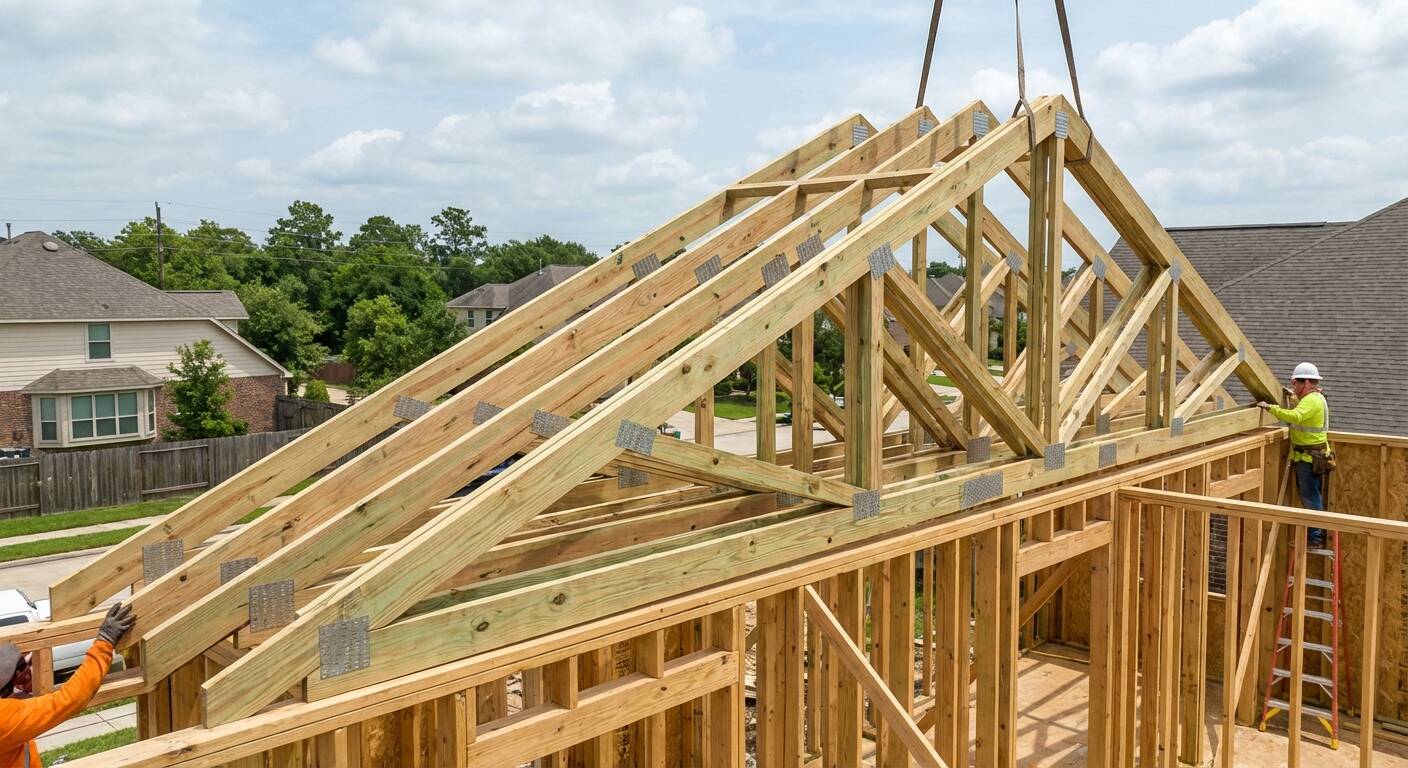
Hurricane-force winds don't just push down on roofs — they pull up. Uplift forces can rip trusses off walls if the connections aren't designed to resist them. That's where hurricane ties, metal straps, and proper anchoring systems come into play. These aren't optional upgrades in Houston. They're survival tools.
The roof sheathing and covering also need to meet wind resistance standards. Cheap installation or subpar materials will fail when it matters most. We've seen entire neighborhoods lose roofs during storms because builders cut corners on fasteners or used inadequate tie-downs. Don't be that builder. Spec it right and install it right.
Moisture and Ventilation Can't Be Ignored
High humidity and frequent rain create perfect conditions for mold and rot if your attic can't breathe. Ridge vents, soffit vents, and gable vents work together to move air through the roof structure, pulling heat and moisture out before they cause damage. Stagnant attic air is a ticking time bomb in Houston's climate.
Vapor barriers and water-resistant underlayment add another layer of protection. They stop moisture from migrating into the truss system and insulation, which keeps everything dry and functional. Skipping these details might save a few bucks upfront, but the long-term cost in repairs and energy waste will dwarf that savings.
Energy Efficiency Starts at the Truss
Houston summers are brutal, and cooling costs reflect that. The truss design should accommodate enough insulation to keep conditioned air inside and heat outside. Raised heel trusses are a smart move because they create space for thicker insulation at the eaves, where heat transfer is highest.
Reflective roof materials and radiant barriers can be integrated into the design to bounce heat away before it penetrates the attic. These aren't gimmicks — they're proven strategies that lower energy bills and improve comfort. If you're building new, there's no excuse not to bake energy efficiency into the truss design from day one.
Key Truss Design Factors
- Wind resistance ratings that meet or exceed local hurricane zone requirements
- Proper anchoring systems including hurricane ties and metal connectors
- Material selection based on moisture resistance and structural demands
- Ventilation pathways that prevent heat and humidity buildup
- Insulation space that supports energy efficiency goals
Common Material Options
- Treated lumber for moisture and pest resistance
- Engineered wood products for consistent strength and dimensional stability
- Steel trusses for maximum durability and span capacity
- Hybrid systems that combine materials for specific performance needs
Ventilation Components That Work
- Ridge vents for continuous airflow along the roof peak
- Soffit vents to draw fresh air into the attic space
- Gable vents for cross-ventilation in certain roof designs
- Vapor barriers to prevent moisture migration into insulation
- Water-resistant underlayment to protect against leaks
Load Considerations Beyond the Basics
- Solar panel arrays that add concentrated dead load
- HVAC equipment mounted on or near the roof structure
- Heavy roofing materials like concrete or clay tiles
- Snow and ice loads, which are rare but not impossible in Houston
- Future additions or modifications that might increase load demands
Professional Coordination Points
- Structural engineers who calculate loads and design truss specifications
- Truss manufacturers who fabricate to exact engineering standards
- Architects who integrate truss design with overall home aesthetics
- Builders who install trusses according to approved plans and code requirements
- Inspectors who verify compliance before allowing construction to proceed
Building Smart Means Building Strong
Taking on a new home build isn't the hard part. Designing a roof truss system that'll stand up to Houston's weather — and defending those choices when the inspector shows up — that's where projects get derailed. There's no excuse for cutting corners when the engineering is available and the stakes are this high.
We've seen too many builders treat truss design like an afterthought, only to face callbacks, failures, or worse when the first major storm rolls through. The right design, the right materials, and the right installation practices aren't luxuries. They're the baseline for building homes that protect families and hold value for decades.
Let's Build It Right, Together
When it comes to roof truss design in Houston, every detail matters if you want a home that stands strong through every season. We’re here to help you make the smart choices from the start—no guesswork, no shortcuts. If you’re ready to get your project moving with confidence, give us a call at 407-431-4263 or get a quote and let’s make sure your new build is set up for lasting success.
‹ Back
Recent Posts
-
Roof Truss Layouts for Custom Homes in Austin
October 1, 2026
-
Are Roof Trusses in Houston Good for Modern Home Designs?
September 17, 2026
-
-
-