

By using our website, you agree to the use of cookies as described in our Cookie Policy
How Roof Trusses in Dallas-Fort Worth Can Speed Up Construction
Most builders think framing is just about getting a roof over the structure. Something functional. Something that stands. But the timeline you choose — trusses versus stick framing — can push your schedule forward by weeks or drag it into weather delays and blown budgets. Trusses aren't magic. They're manufactured precision. And in a market as competitive as Dallas-Fort Worth, that precision translates into real time saved and real money kept.
Here's what matters. If you're managing multiple builds or trying to close a project before the next storm rolls through, every day counts. Trusses arrive engineered, ready to lift. They don't need carpenters cutting rafters in the heat or rain. They just need a crew that knows how to set them and move on. That difference — between days of framing and hours of installation — is what separates projects that finish on schedule from ones that limp across the line.
Prefabrication Cuts Weeks Off the Calendar
Traditional framing means your crew is measuring, cutting, and assembling every rafter on-site. That's labor-intensive. Weather-dependent. And prone to human error when the sun's beating down at 98 degrees. Pre-fabricated trusses flip that script entirely. They're built in a controlled facility, delivered to spec, and ready the moment they hit the jobsite.
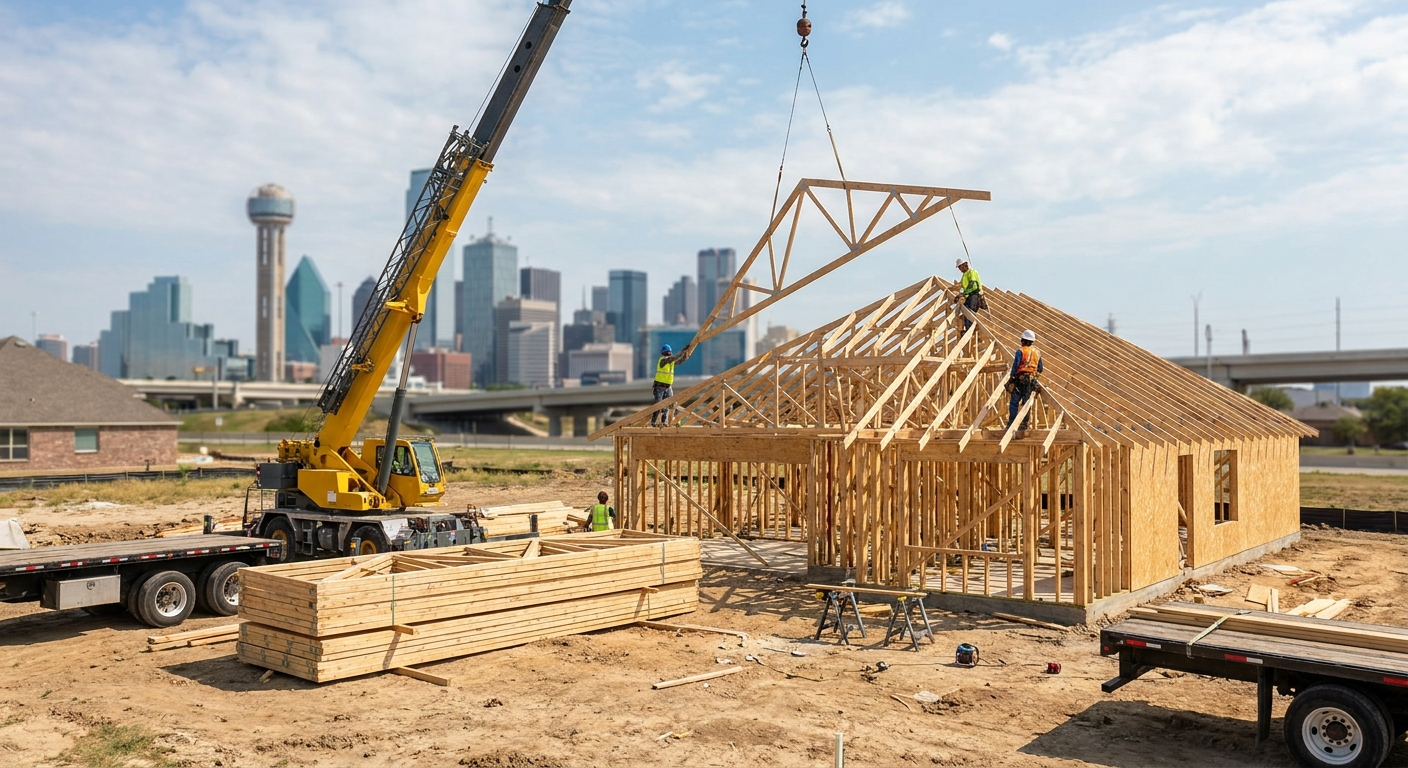
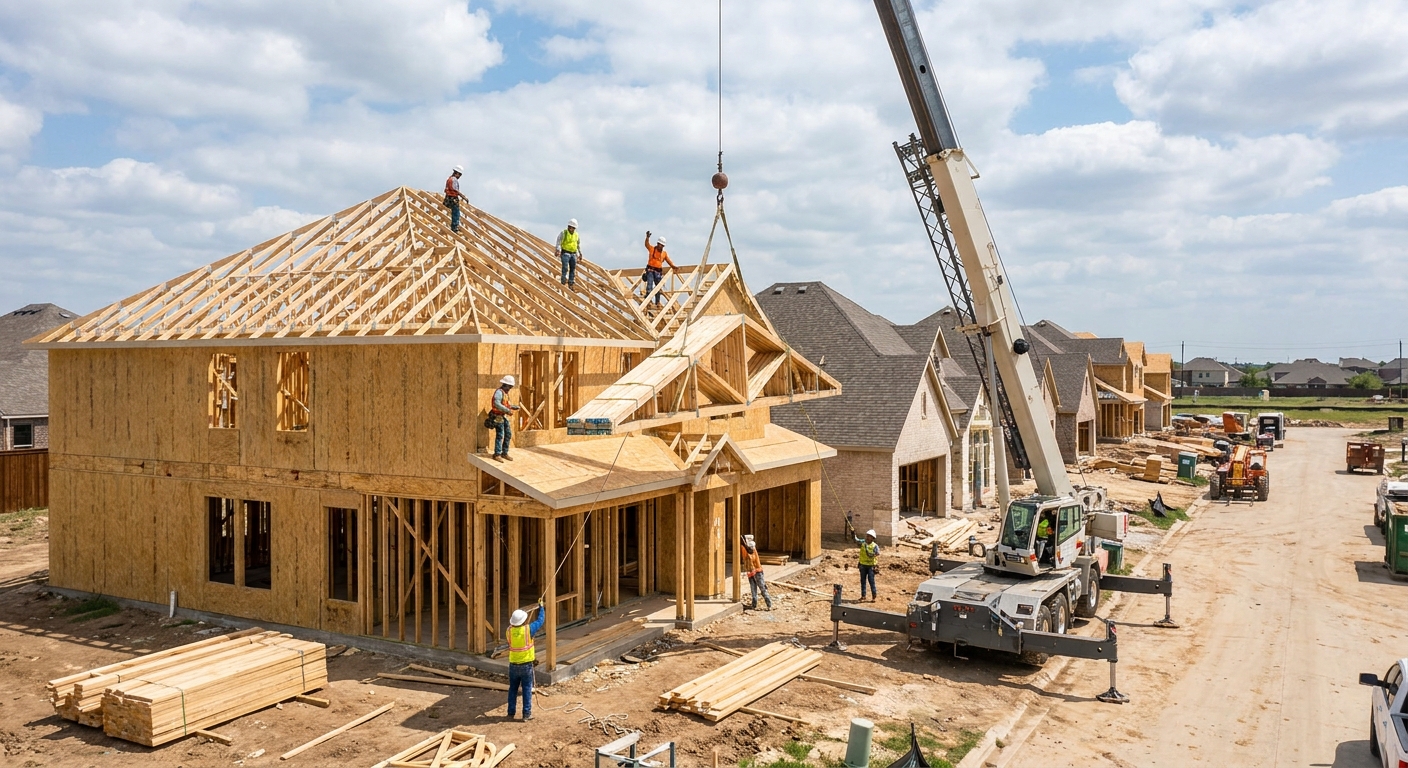
Installation doesn't drag out over days. A competent crew can set an entire roof structure in a single day — sometimes less. That speed matters in DFW, where summer storms can turn an open frame into a liability overnight. Getting the structure dried in fast protects everything underneath and keeps the schedule moving forward without interruption.
Engineering Precision Beats Guesswork Every Time
Trusses are designed with software that accounts for load, span, pitch, and code requirements before the first piece of lumber gets cut. That level of accuracy isn't something you can replicate with a tape measure and a circular saw on a hot roof deck. Every truss in the shipment is identical. Every connection point is calculated. Every angle is exact.
In Dallas-Fort Worth, where inspectors don't tolerate sloppy work, that consistency is a lifesaver. You're not scrambling to fix misaligned rafters or recut boards that don't fit. The structure goes up clean, passes inspection without drama, and keeps the entire build on track. No rework. No delays. Just progress.
Labor Shortage Problems Get Smaller
Finding skilled framers in DFW isn't easy right now. And when you do find them, you're paying premium rates to keep them on your crew. Trusses reduce how many carpenters you need on-site and how long they're tied up on framing tasks. That frees up labor for other phases — drywall, trim, finishes — where you actually need the manpower.
It also means you're not stuck waiting for a framing crew to finish one project before they can start another. Trusses let you stagger schedules more efficiently and keep multiple jobsites moving without overextending your workforce. That flexibility alone can be the difference between hitting your quarterly goals and falling behind.
Weather Won't Wreck Your Schedule
Texas weather doesn't care about your construction timeline. One day it's clear skies. The next, you're dealing with wind gusts and thunderstorms that shut down work for hours or days. Trusses minimize exposure. Because installation happens fast, you can get the roof sheathed and sealed before the next front moves through.
That speed protects more than just the schedule. It protects the materials already on-site, the subfloor, the framing — everything that water can ruin if left exposed. And it keeps your crew safer too. Less time working at height in unpredictable conditions means fewer risks and fewer liability headaches.
Design Flexibility Without the Time Penalty
Complex rooflines don't have to mean complex timelines. Trusses can be engineered to handle custom pitches, valleys, dormers, and long spans that would take days to frame by hand. Architects in DFW love the freedom trusses provide — open floor plans, vaulted ceilings, dramatic angles — all without adding weeks to the build.
Whether you're working on residential developments or commercial spaces, trusses adapt to the design without slowing down the process. You get the aesthetic you want and the speed you need. That combination is rare in construction, and it's one of the reasons trusses have become standard practice in high-volume markets like Dallas-Fort Worth.
What Makes Trusses Worth the Investment
Speed and precision come with benefits that ripple through the entire project budget. Here's where the value shows up most clearly:
- Faster installation reduces labor hours and overtime costs
- Less material waste from precise manufacturing and fewer on-site cuts
- Fewer weather delays because the roof goes up quickly and gets sealed fast
- Lower risk of inspection failures due to consistent, engineered components
- More efficient scheduling across multiple projects with staggered delivery timelines
Common Mistakes That Slow Projects Down
Even with trusses, builders can lose time if they don't plan properly. Here's where most delays happen and how to avoid them:
- Ordering trusses too late in the schedule and waiting weeks for delivery
- Not coordinating crane or lift equipment in advance, causing installation delays
- Failing to verify site access for delivery trucks, especially in tight residential developments
- Ignoring manufacturer specs for bracing and temporary supports during installation
- Skipping pre-installation inspections and discovering issues after the trusses are already on-site
When Trusses Make the Most Sense
Not every project needs trusses, but most do. If you're building in volume — tract homes, multi-family units, commercial centers — trusses are almost always the faster, smarter choice. The return on speed alone justifies the decision, especially when you factor in labor costs and weather risks unique to North Texas.
For custom homes or smaller remodels, the calculus shifts slightly. But even there, trusses can save time and headaches if the design allows for them. The key is knowing when the upfront coordination pays off in backend efficiency. Most builders in DFW have already made that calculation. That's why you see trusses on nearly every jobsite from Frisco to Fort Worth.
Documentation and Compliance Keep Inspections Smooth
Trusses come with engineered drawings and load certifications that inspectors expect to see. Keep those documents on-site and organized. Losing truss specs or failing to provide stamped plans can stall an inspection and kill your momentum.
Here's what you should have ready before the inspector shows up:
- Manufacturer's truss layout and placement diagrams
- Stamped engineering calculations for load and span
- Installation photos showing proper bracing and fastener placement
- Delivery receipts confirming truss specs match approved plans
- Any field modifications documented and approved by the engineer of record
Choosing the Right Truss Supplier in DFW
Not all truss manufacturers are created equal. Lead times vary. Quality varies. Communication varies. In a market as busy as Dallas-Fort Worth, working with a supplier who delivers on time and gets specs right the first time is non-negotiable.
Look for these traits when vetting truss suppliers:
- Proven track record with local builders and developers
- Clear communication on lead times and delivery schedules
- Ability to handle design changes or custom configurations without long delays
- Engineering support available for plan review and site coordination
- Reliable delivery logistics that account for jobsite access and equipment needs
Timing and Coordination Make or Break Efficiency
Trusses only speed up construction if they arrive when you need them — not two weeks early and not three days late. Coordination with your supplier, your crew, and your equipment rental company has to be tight. A missed delivery or a scheduling conflict can erase every advantage trusses offer.
Smart builders bake in buffer time but keep communication lines open. If the foundation pour runs late, push the truss delivery. If the framing crew finishes early, pull it forward. Flexibility within a structured plan keeps the project moving without unnecessary downtime or storage headaches. Understanding when to schedule roof truss delivery can help avoid common pitfalls and maintain momentum throughout the build.
Building Faster Without Cutting Corners
Speed doesn't mean sloppy. It means efficient. Roof trusses let you build faster because they eliminate waste — wasted time, wasted labor, wasted material. In Dallas-Fort Worth, where demand is high and margins are tight, that efficiency translates directly into competitive advantage.
We've seen builders cut weeks off their timelines by switching to trusses. We've watched projects stay on budget through storm season because the roof went up fast and stayed dry. That's not luck. That's planning. And it's exactly what separates builders who thrive in this market from those who barely survive it.
Let’s Build Smarter, Together
Every project deserves the kind of speed and precision that keeps you ahead of the curve in Dallas-Fort Worth. If you’re ready to streamline your next build and avoid costly delays, let’s talk about how we can help you make the most of your schedule and budget. Call us at 407-431-4263 or get a quote today and see how our expertise can keep your construction moving forward without compromise.
‹ Back
Recent Posts
-
Roof Truss Layouts for Custom Homes in Austin
October 1, 2026
-
Are Roof Trusses in Houston Good for Modern Home Designs?
September 17, 2026
-
-
-