

By using our website, you agree to the use of cookies as described in our Cookie Policy
Are Roof Trusses in Houston Good for Modern Home Designs?
Most homeowners think trusses are just about holding up shingles. Framework goes up, roof stays put. But the structural reality runs deeper than that — and if you miss it, you're limiting what your home can become. Trusses don't just carry loads; they shape entire floor plans, dictate ceiling heights, and determine whether your modern design vision actually pencils out. Especially if you're chasing open layouts or dramatic rooflines.
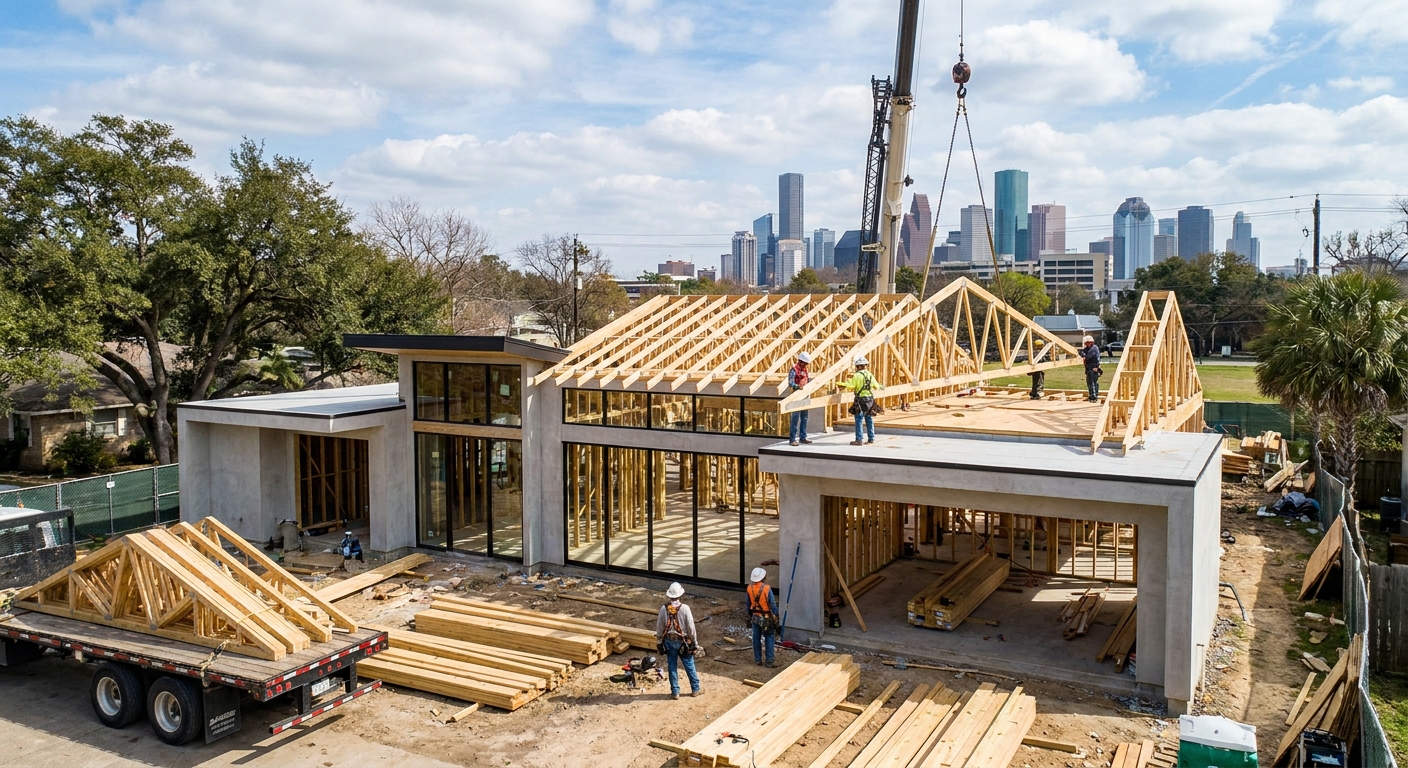
Here's what matters. If you're building something sleek and contemporary in Houston, trusses aren't a fallback — they're often the smarter play. Just don't assume every truss system fits every design. The engineering needs to match your goals. The installation needs to account for Houston's weather. And every structural choice should reflect how you plan to live in the space — not just how it looks in the rendering.
Why Trusses Work Better Than Most People Realize
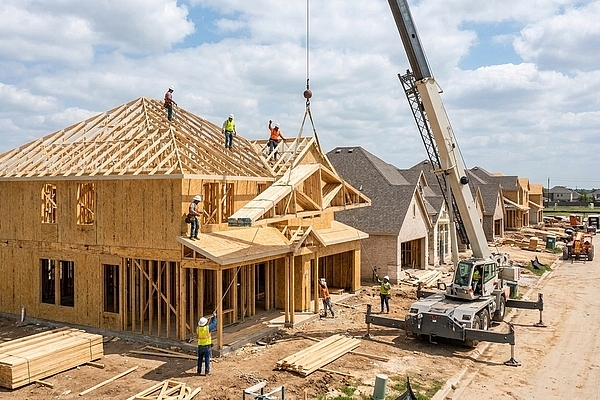
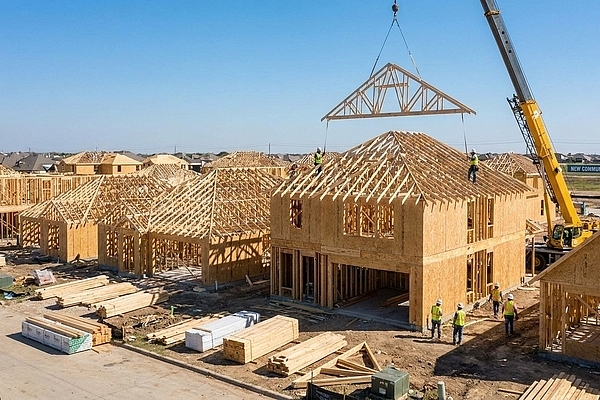
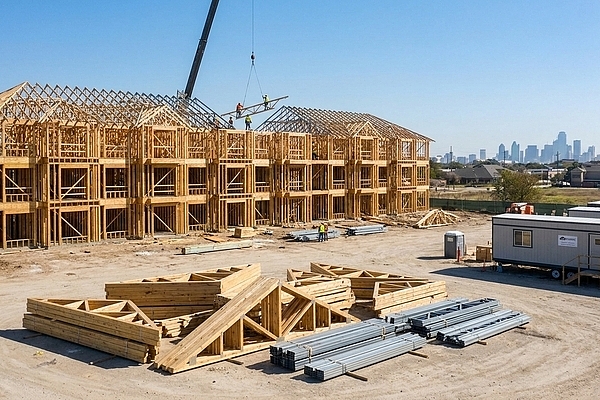
Prefab trusses arrive on-site ready to go. No onsite cutting, no guesswork about load paths. That's precision you don't get with stick framing. The factory builds them to spec, engineers sign off, and your crew bolts them into place. Speed matters when you're racing weather or trying to lock in labor costs before they climb again.
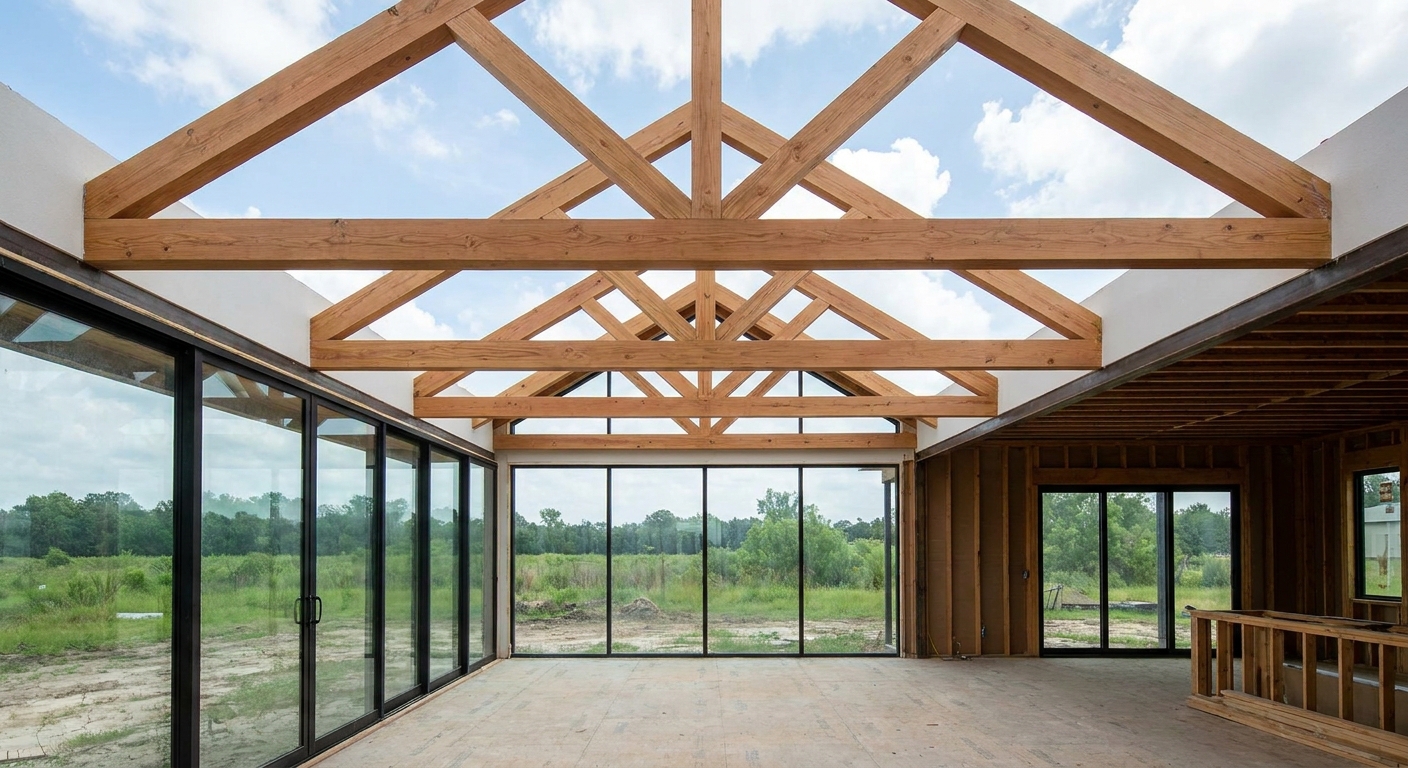
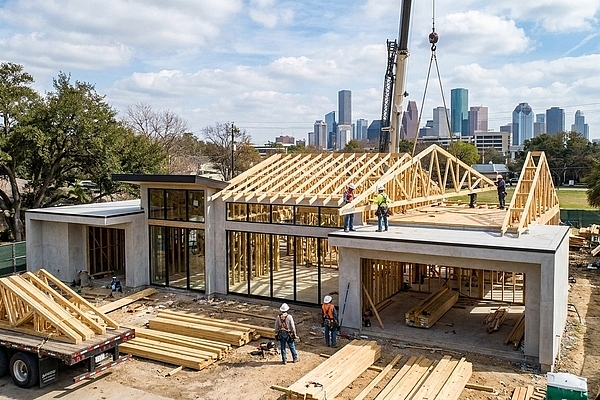
But speed isn't the whole story. Trusses let you clear wider spans without interior posts or beams cluttering your sightlines. We've seen modern Houston homes with 30-foot open living areas, vaulted ceilings, and glass walls — none of it possible without engineered trusses doing the heavy lifting. If your design calls for fewer walls and more breathing room, this is how you get there.
Houston Weather Doesn't Play Nice
Humidity sits heavy here year-round. Storms roll through fast and mean. If your roof structure can't handle moisture, wind shear, and occasional flooding, you're asking for trouble down the line. Trusses built for Gulf Coast conditions come treated for rot and rated for hurricane-force gusts.
The open-web design also promotes airflow through your attic space, which cuts down on trapped heat and moisture buildup. That's not a luxury in Houston — it's a requirement. Poor ventilation leads to mold, sagging insulation, and energy bills that never stop climbing. Trusses give you the structural skeleton and the breathing room in one package.
What Trusses Bring to Modern Builds
If you're serious about clean lines, minimal interruptions, and maximizing usable square footage, trusses check every box. They're not just functional — they enable the aesthetic.
- Wider spans mean fewer interior supports and more flexibility in room layout
- Engineered precision allows for complex roof angles and asymmetrical designs
- Factory production cuts waste and trims labor hours on-site
- Load distribution handles heavy tile, metal panels, or green roof systems without additional reinforcement
- Installation speed keeps your project moving even during tight timelines
Where Trusses Hit Limits
No system is perfect. Trusses arrive in large sections, and that can create headaches on narrow lots or sites with restricted access. If your property sits behind tight streets or has mature trees hemming in the build zone, delivery and crane work get complicated fast. Plan ahead or you'll burn days just getting materials in position.
Customization also has a ceiling. Standard truss profiles cover most modern designs, but if you're chasing something wildly unconventional — think swooping curves or multi-plane intersections — you may need custom engineering. That bumps cost and lead time. It's doable, just not always cheap.
The Details That Derail Projects
Even when trusses fit your design, installation mistakes can undo the benefits. We've seen crews skip proper bracing during assembly, leading to misalignment and structural issues later. Others fail to coordinate truss layout with HVAC runs or electrical chases, forcing awkward workarounds that compromise efficiency.
- Bracing must follow the engineer's layout exactly — no shortcuts
- Truss placement needs to align with wall framing and load-bearing points
- Mechanical systems should be mapped before trusses go up, not after
- Attic access and insulation depth require planning around web members
- Fastener schedules and connection hardware aren't suggestions — they're code
Cost Versus Value Over Time
Trusses typically cost less upfront than comparable stick-framed roofs. Material waste drops because everything's cut to spec at the factory. Labor hours shrink because assembly is faster and requires fewer specialized cuts. For budget-conscious builders, that's real money back in the project.
But the value extends past day one. Properly installed trusses last decades with minimal maintenance. They don't sag, twist, or settle the way some field-built roofs do. And because they're engineered for specific loads, you're not gambling on whether your roof can handle that solar array or rooftop deck you want to add later.
Matching Trusses to Your Vision
Modern design in Houston spans everything from minimalist boxes to bold cantilevers. Trusses adapt to most of it, but only if your architect and engineer collaborate early. Waiting until framing starts to figure out truss profiles is too late.
- Flat or low-slope roofs need trusses designed for drainage and membrane support
- Vaulted ceilings require scissor trusses or raised-heel configurations
- Overhangs and cantilevers demand custom load calculations
- Mixed roof planes call for careful transitions between truss types
- Energy efficiency goals influence insulation depth and ventilation paths
Why Local Codes and Engineering Matter
Houston sits in a high-wind zone with specific code requirements for roof assemblies. Your truss manufacturer needs to engineer for those loads, and your building inspector will verify compliance before issuing permits. Cutting corners or assuming generic trusses will pass is a fast track to delays and rework.
Work with engineers who know Harris County's rules and inspectors who've seen hundreds of truss installations. They'll flag issues before they become problems and keep your project moving through approvals without drama. When choosing a roof truss manufacturer, verify their engineering capabilities and local code knowledge upfront.
Common Mistakes That Cost More Later
Plenty of builders treat trusses like plug-and-play components. Order them, drop them in, move on. But small oversights stack up fast.
- Ignoring site access during planning leads to delivery delays and added crane costs
- Skipping pre-installation meetings with HVAC and electrical subs creates conflicts mid-build
- Failing to protect trusses from weather before installation can warp wood and void warranties
- Overlooking attic ventilation requirements results in moisture damage and code violations
- Choosing the cheapest bid without vetting the truss manufacturer risks quality issues
Getting the Right Team in Place
Trusses don't install themselves, and not every framing crew has the experience to handle them correctly. You need a team that reads engineered drawings, follows bracing specs, and coordinates with other trades without constant supervision.
Ask for references. Check past projects. Make sure your builder has worked with trusses on modern designs before, not just tract homes. The stakes are too high to treat this like on-the-job training.
Building Smart Means Building for Houston
Roof trusses aren't just compatible with modern home designs in Houston — they're often the best way to pull them off. They deliver the open interiors, clean profiles, and structural performance that define contemporary architecture. But only if you plan thoroughly, engineer precisely, and execute without cutting corners. Understanding how roof truss design affects energy efficiency is critical for long-term performance in Texas climates. Trusses won't fix bad design or sloppy installation. They will, however, turn a solid vision into a home that performs exactly as intended, year after year, storm after storm.
Ready to Start Your Modern Houston Build?
Let's make your vision a reality with roof trusses engineered for Houston's unique demands. We’re here to answer your questions, walk you through the process, and ensure your project gets the structural backbone it deserves. Give us a call at 407-431-4263 or get a quote today to get started on your next home.
‹ Back
Recent Posts
-
Roof Truss Layouts for Custom Homes in Austin
October 1, 2026
-
Are Roof Trusses in Houston Good for Modern Home Designs?
September 17, 2026
-
-
-